Streetwear has never been only about clothes. At its best, it reflects where people come from, what they listen to, who they admire, and how they want the world to see them. Few modern British labels have understood that relationship between clothing and culture as effectively as Corteiz, often written as CRTZ or Corteiz Rules The World.
What makes Corteiz particularly interesting is not simply the popularity of its hoodies, cargos, tracksuits or jackets. The real story is the way the brand developed. Rather than beginning with a huge retail operation, a conventional advertising campaign or a long-established fashion house behind it, Corteiz emerged from London’s street culture and built its reputation through scarcity, community, personality and an unusually strong sense of independence.
Founded by Clint Ogbenna, better known online as Clint419, Corteiz began in 2017 and gradually developed from a relatively small London streetwear project into an internationally recognised name. Its rise is a useful example of how modern fashion can be built through cultural relevance rather than traditional fashion-industry formulas.
The Beginning of Corteiz
The history of Corteiz joggers starts in London in 2017, when Clint Ogbenna launched the brand with a vision that was considerably more ambitious than simply printing another logo onto a T-shirt.
Clint had already experimented with clothing before Corteiz. Earlier work gave him experience with producing and selling garments independently, but Corteiz became the project that truly captured attention. The early operation was small, personal and closely connected to the creator himself. Rather than feeling like a distant corporation, the brand appeared to come directly from the world it was trying to represent.
That distinction became important.
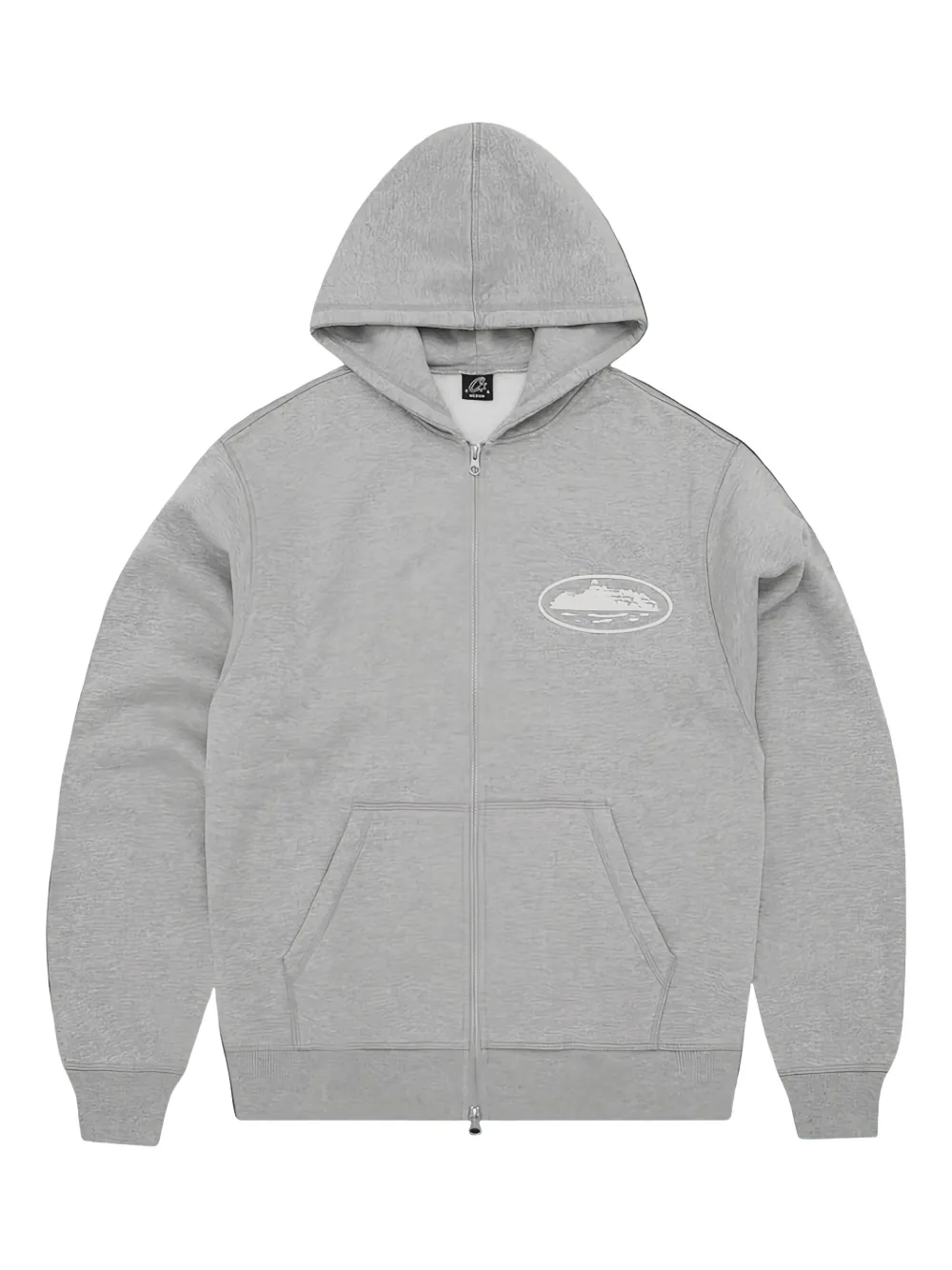
From the beginning, Corteiz did not appear interested in looking like every other streetwear company. It developed its own visual language, its own vocabulary and, eventually, its own way of communicating with customers. The brand’s famous Alcatraz-inspired symbol became one of its most recognisable features, while the phrase “Rules The World” helped communicate the confidence behind the label.
The early scale of the business makes its later growth even more remarkable. A case study about the company records that one of its earliest official drops consisted of only 16 hoodies. That is a tiny quantity compared with the production runs normally associated with successful fashion companies, but scarcity eventually became one of Corteiz’s greatest strengths.
Why the Alcatraz Logo Matters
A logo can be decoration, but it can also become a statement.
Corteiz’s Alcatraz imagery has long been associated with ideas of freedom, independence and resistance to convention. Alcatraz itself is historically associated with confinement, making its use by a rebellious streetwear label an interesting contradiction: a symbol of imprisonment becomes part of a message about breaking away.
That tension fits Corteiz’s wider identity.
The brand has never seemed particularly interested in asking for permission from traditional fashion institutions. Instead, its visual identity communicates the idea of doing things independently and refusing to follow a predictable path.
This is one reason the logo became more than a simple branding device. For people wearing Corteiz, the symbol can function almost like a badge. It suggests that the wearer understands the culture surrounding the brand rather than simply purchasing an item because it happens to be fashionable.
From London Streets to a Wider Audience
Corteiz’s growth cannot be separated from London’s enormous influence on contemporary music and street culture.
London has produced generations of artists, designers and creative communities that have influenced fashion far beyond the United Kingdom. British grime, UK rap, football culture, underground parties and youth fashion have all helped shape the visual identity of the city.
Corteiz emerged naturally within this environment.
Instead of trying to imitate American streetwear completely, the brand developed an identity that felt connected to its London surroundings. That gave it an authenticity that is difficult to manufacture through a marketing campaign.
As the label became more visible, well-known musicians and cultural figures wearing Corteiz helped introduce the brand to audiences who might not previously have known it. Artists including Stormzy, Dave, Central Cee and Drake have been associated with the brand, contributing to its growing visibility in music and popular culture.
However, celebrity attention alone does not explain Corteiz’s success.
Plenty of brands receive celebrity exposure and disappear a few seasons later. Corteiz managed to turn attention into a community.
The Power of Limited Drops
Perhaps the most important part of the Corteiz story is the company’s approach to releasing products.
Traditional fashion retail generally aims to make products available. Corteiz frequently did the opposite.
The brand became known for limited product drops, with relatively small quantities available for customers. Instead of allowing shoppers to browse a permanently stocked online store, drops created moments of anticipation. Customers had to pay attention, react quickly and sometimes compete with thousands of other people for the same product.
That changed the psychological relationship between the customer and the clothing.
A hoodie purchased from a constantly stocked online shop is simply a hoodie. A hoodie obtained during a highly anticipated Corteiz drop can feel like evidence that the buyer was there at the right moment.
Scarcity therefore became part of the product.
The company’s own terms explicitly refer to its releases as “product drops,” while its official archive demonstrates how the brand continues to structure its history around specific releases and collaborations.
When Scarcity Becomes Culture
The genius of limited drops is that they create conversation before a product even arrives.
People speculate about upcoming releases. They discuss colours and designs. They share information through social media. They post what they managed to buy. They talk about what sold out. The product becomes part of a larger conversation.
This is very different from conventional advertising.
Instead of repeatedly telling people that a product is desirable, the scarcity itself creates evidence of demand. If an item disappears quickly, people naturally assume that other people wanted it.
Corteiz understood this dynamic extremely well.
Its approach demonstrated that a streetwear company did not necessarily need enormous advertising campaigns to generate attention. A strong identity combined with limited availability and an active community could create its own momentum.
The Importance of Community
One of the most interesting things about Corteiz is the relationship between the brand and its audience.
Many fashion companies describe their customers as a “community,” but the term can become little more than marketing language. Corteiz has historically made community participation feel more tangible.
The brand’s unusual releases and street-level promotions encouraged people to pay attention to what was happening around them. Some of its campaigns became events rather than conventional product launches.
That approach helped turn customers into participants.
People were not simply waiting for a new collection to appear in a shop. They were following the story of the brand itself.
This distinction is important because modern consumers, particularly younger audiences, often respond strongly to brands that feel culturally meaningful. They want to know what a company represents, not simply what it sells.
Corteiz provided an answer through its attitude: independence, confidence, scarcity and a refusal to behave like a conventional fashion business.
Corteiz and the Rise of the Hoodie
The hoodie has become one of the defining garments of modern streetwear, and Corteiz has used it particularly effectively.
A Corteiz hoodie generally combines a relatively straightforward silhouette with strong branding or graphic details. The simplicity makes the pieces wearable, while the branding provides the cultural recognition that streetwear customers often seek.
The appeal is partly practical.
A hoodie works with jeans, cargos, shorts, trainers and tracksuits. It can be worn casually without requiring a complicated outfit. Yet the right Corteiz design can still communicate something immediately to someone familiar with the brand.
That balance between everyday clothing and cultural symbolism has helped the hoodie become one of the label’s most recognisable categories.
Corteiz Cargos and Everyday Streetwear
Cargos occupy another important position in the Corteiz aesthetic.
The appeal of cargo trousers comes partly from functionality. Multiple pockets, relaxed silhouettes and durable-looking construction have made them a natural fit for streetwear.
Corteiz has incorporated that practicality into a more fashion-focused environment.
Rather than treating streetwear as clothing reserved for special occasions, the brand’s products generally work as everyday pieces. Hoodies, cargos, tracksuits, jackets and T-shirts can be combined in different ways, giving wearers considerable freedom to create their own look.
That versatility is part of the reason the brand has been able to move beyond a niche audience.
The Corteiz Tracksuit Era
The tracksuit has a particularly strong relationship with British street culture, making it an obvious category for a London-based streetwear label.
Corteiz tracksuits have become closely associated with the brand’s visual identity. They combine comfort with a strong coordinated appearance, allowing the wearer to create an entire outfit without relying on multiple unrelated pieces.
The popularity of tracksuits also reflects a wider change in fashion.
The boundary between sportswear, casual clothing and luxury fashion has become increasingly blurred. People now expect clothing to be comfortable while still looking deliberate and distinctive.
Corteiz operates directly within that space.
Collaborations That Expanded the Brand
As Corteiz grew, collaborations became another important part of its story.
The brand’s official archive records projects involving major names such as Nike, New Era, Denim Tears, Dave and others.
The Nike relationship was particularly significant.
Nike is one of the world’s most recognisable sportswear companies, while Corteiz had built its identity through a much more independent and underground route. Bringing the two together created a contrast that was culturally powerful.
Rather than making Corteiz disappear inside a larger corporation, the collaborations demonstrated how far a once-small London label had travelled.
They also introduced Corteiz to people who might never have encountered the brand through its original underground channels.
Why the Brand Feels Different
The simplest explanation for Corteiz’s success is that it feels difficult to copy.
Competitors can reproduce certain visual elements. They can make hoodies, cargos and tracksuits. They can use bold graphics and limited releases.
But copying the surface does not necessarily reproduce the culture.
Corteiz was built around a combination of factors: Clint419’s personality, London’s creative environment, limited availability, social media communication, collaborations, community participation and a strong anti-establishment attitude.
The combination is what makes the brand distinctive.
This is an important lesson in modern fashion. A successful streetwear label is rarely selling fabric alone. It is selling an identity that people want to associate with themselves.
Corteiz in the Digital Age
Corteiz’s rise also demonstrates how dramatically the internet has changed fashion.
A young designer no longer necessarily needs to secure shelf space in a major department store before reaching a global audience.
Social media can create awareness. Online communities can spread information. Limited releases can create urgency. A single photograph can reach millions of people.
Corteiz developed during precisely this transition.
Its online-first approach allowed the company to communicate directly with its audience. The distance between creator and customer became smaller, while the unpredictability of releases made followers pay close attention.
The result was a brand that could generate considerable excitement without relying on the traditional fashion calendar.
Corteiz and Authenticity
The word “authenticity” is overused in fashion, but Corteiz’s history illustrates why it matters.
Authenticity does not necessarily mean that every product must be handmade or that a brand must remain permanently underground. Instead, it means that the brand’s actions feel consistent with the identity it communicates.
Corteiz’s message of independence would lose its impact if the brand suddenly behaved like a conventional mass-market retailer.
Its appeal has always been connected to the feeling that it is doing things on its own terms.
That is why the story behind the clothing matters so much.
The Problem of Counterfeits
Success brings another problem: imitation.
As Corteiz became increasingly popular, counterfeit versions and websites claiming to sell Corteiz products became more common. This is an important consideration for anyone searching for Corteiz clothing online.
Customers should not assume that a website is officially connected to Corteiz simply because its domain contains words such as “Corteiz,” “CRTZ” or “UK.”
This is particularly relevant to corteiz.uk. The website presents itself as a Corteiz UK clothing store, but consumers should distinguish that claim from the brand’s own corporate information. Corteiz’s official terms state that its website is operated in the UK by 419Studios Ltd trading as CORTEIZ RULES THE WORLD, and its official web presence uses Corteiz/CRTZRTW properties.
Anyone purchasing should therefore verify the seller, policies, contact information and relationship to the brand rather than relying only on appearance.
What Corteiz Represents Today
Corteiz is now much more than the small London project that appeared in 2017.
Its growth represents a broader change in the fashion industry. Consumers are increasingly interested in brands that have a point of view. They want products that is such a crowded creative landscape. New fashion labels appear constantly, yet only a small number become carry cultural meaning, not just attractive designs.
Corteiz has demonstrated that a brand can build international recognition while retaining a strong connection to its original environment.
That is particularly impressive because London itself is such a crowded creative landscape. New fashion labels appear constantly, yet only a small number become recognisable outside their original communities.
Corteiz managed to cross that boundary.
The Future of Corteiz
The biggest challenge for Corteiz may actually be its own success.
The brand’s original appeal came partly from its sense of mystery, scarcity and underground credibility. As a label becomes more famous, maintaining those qualities becomes increasingly difficult.
There is always a tension between exclusivity and growth.
If too many people can buy a product, scarcity loses some of its power. If releases become too predictable, anticipation can decline. If a brand becomes too commercial, the rebellious identity that originally attracted its audience may feel less convincing.
Corteiz therefore faces the same challenge that eventually confronts many successful streetwear labels: how to become bigger without becoming ordinary.
Its history suggests that the brand understands this tension.
The continued use of limited releases, collaborations and strong visual storytelling indicates that Corteiz remains interested in maintaining a distinct identity rather than simply becoming another mass-market clothing company. Its current archive shows that collaborations and major releases remain central to the brand’s activity.
More Than Clothing
Ultimately, the Corteiz story is not really about hoodies, cargos or tracksuits.
Those products are simply the physical expression of a much larger idea.
Corteiz represents the possibility of building something independently, starting with limited resources and gradually turning a personal creative vision into a global cultural presence. Its rise from London’s streetwear environment to international recognition demonstrates how much influence community, identity and storytelling can have in modern fashion.
The famous “Rules The World” message captures that ambition perfectly.
It is bold. It is almost deliberately excessive. And that is exactly why it works.
Corteiz does not ask people to see it as an ordinary clothing company. It asks them to see it as a movement, a mindset and a symbol of independence.
That is the real reason its history matters.
From a small beginning in London in 2017 to collaborations with some of the biggest names in fashion and culture, Corteiz has challenged the traditional formula for building a successful clothing brand. It has shown that scarcity can create desire, that community can replace conventional advertising, and that a strong cultural identity can carry a label far beyond its original neighbourhood.
For anyone discovering Corteiz through corteiz.uk, the most interesting part of the story is therefore not simply deciding which hoodie or tracksuit looks best. It is understanding why the brand became important in the first place.
Corteiz succeeded because it gave people something to belong to.
And in a fashion industry where trends can disappear almost overnight, that sense of belonging may be the most valuable thing a brand can create.